Press Kit Includes:
- Book information and publication details
- Author bio (short and long versions)
- Full summary
- Advance praise
- Suggested interview topics
📩 For media inquiries, review copies, or event bookings: caleb@calebdardick.com
Press Materials
Images
- High(print)-resolution author headshot
- Low(web)-resolution author headshot
- High-resolution book cover
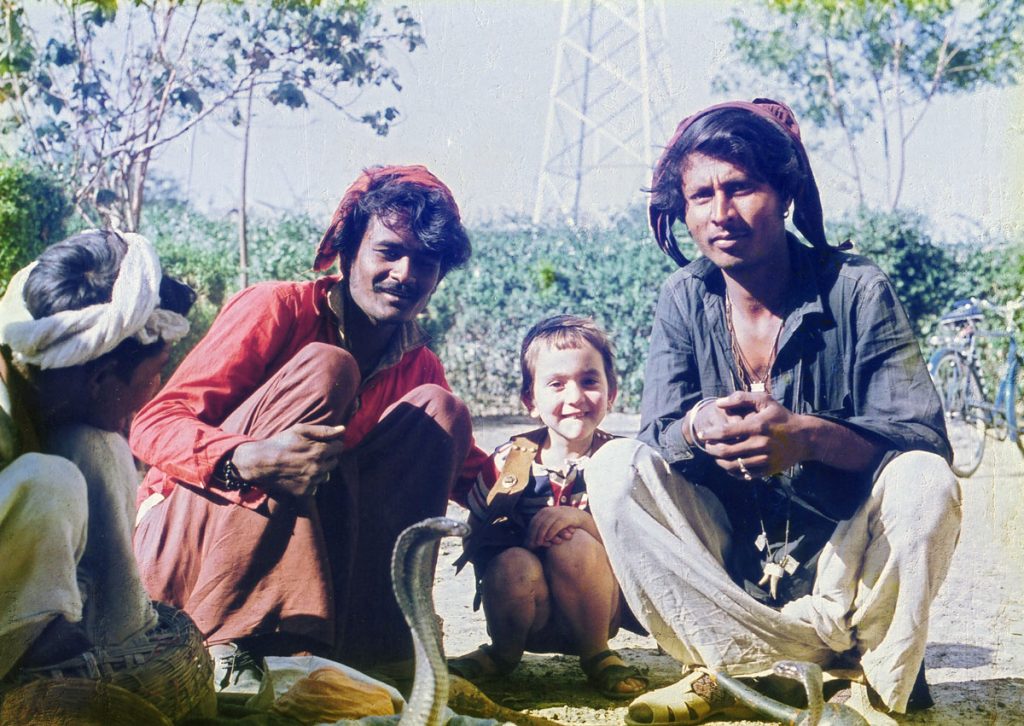
- Archival family photographs from the Hippie Trail are available for media use upon request (see Photo Album).


Reader Resources
Review copies are available upon request as hard-copy ARCs, PDF, or ePUB.
Caleb is available for interviews tied to the September 21 publication date and upcoming events in Nevada City, Davis, Sacramento, St. Louis, and Portland.
Story Angles:
- A child’s-eye view of the counterculture
- Wonder and instability on the Hippie Trail
- Disability and interdependence before the ADA
- Family stories as cultural history
- Bay Area, Berkeley, and Northern California connections
- 2027 Summer of Love anniversary relevance
***
Reviews & Interviews:
Print: “His Jewish St. Louis family took the hippie trail to India. He was 5.,” St. Louis Jewish Light, 9/23/26
Radio: “Superfreak tells his story,” (with Rachel Howard), Davisville, KDRT 97.5FM, 9/21/26
Podcast: Let’s Talk! “Caleb Dardick: An Author’s Journey,” produced by Disability Cultural Alliance, Portland Community College, 9/11/26 (on Spotify)
Review: “Riding Shotgun on the Hippie Trail — Travels with Brunhilda and the Brute Family,” Pamela Biery, YubaNet, 9/4/26
Podcast: ADA Live! “Episode 157: The Adventures of Superfreak: My Childhood on the Hippie Trail with My Disabled Parents,” Southeast ADA Center at Syracuse University, 9/2/26
Review: Mixed Media: September 2026, California Magazine, 8/28/26
***
Caleb Dardick, the author of The Adventures of Superfreak: My Childhood on the Hippie Trail, is available for interviews, features, podcast conversations, and event appearances.
Caleb Dardick speaks about growing up on the Hippie Trail in the 1970s, living within the American counterculture, navigating parental disability and untreated bipolar disorder, and what it meant to “drop out” — and what followed.
His approach blends storytelling with cultural reflection, offering both a child’s-eye view of the era and an adult’s reckoning with its legacy.